POCOPOCO JOURNAL
Choose yarn colours with a small table-top exercise
Give three colours a role, change their proportions, and choose the combination you want to try. Start with yarn you already have.
About a 3-minute read
You have several yarn colours you like, but putting them together feels harder than choosing them separately. Before buying another ball of yarn, try a small colour exercise on a table. You do not need to find the perfect palette or follow a rule about matching colours. The aim is to notice which arrangement you would enjoy using in a knitting or crochet project. This exercise explores appearance only; it does not tell you whether different yarns can be substituted in knitting or crochet instructions.
Begin with three colours you already like
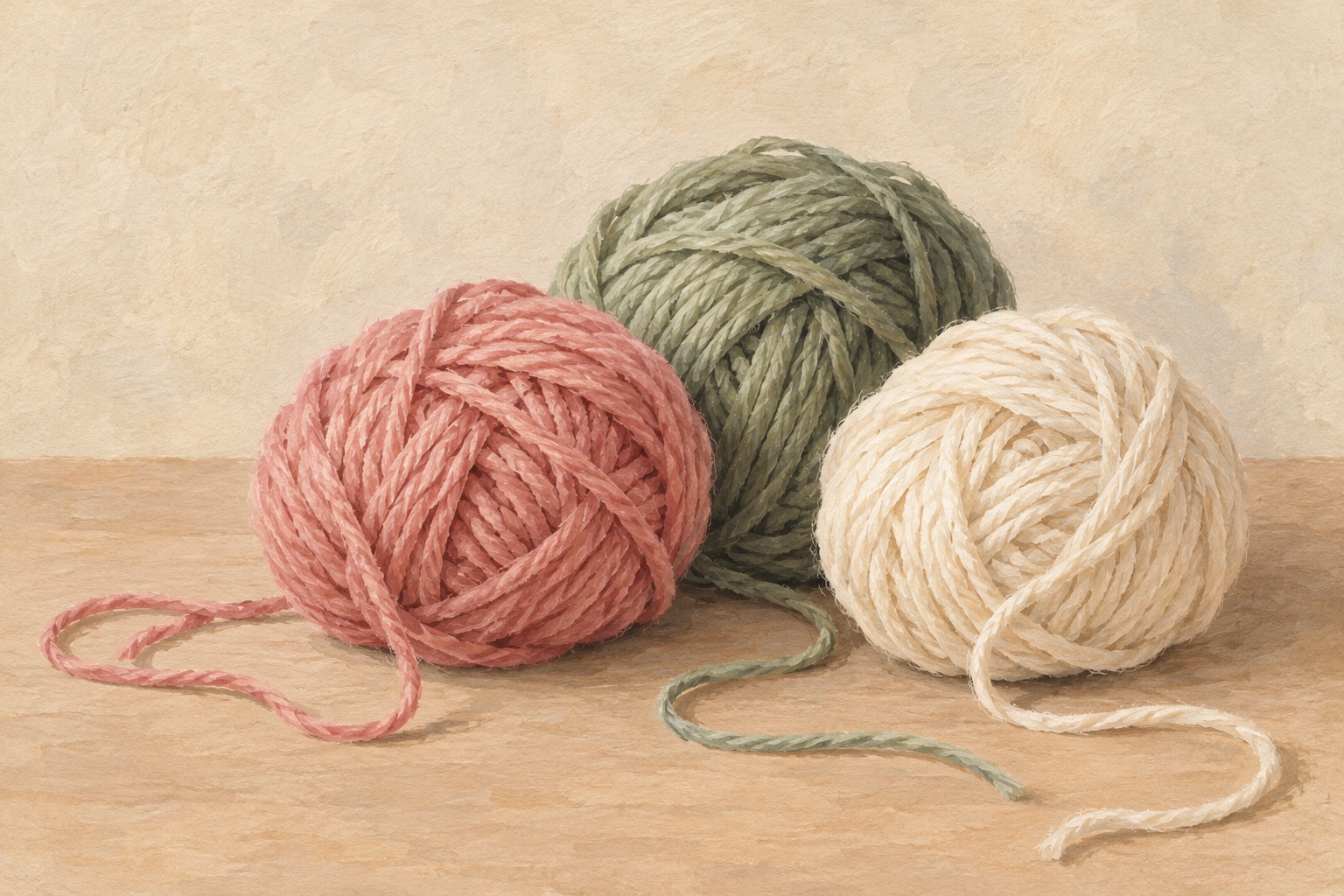
Choose three colours from yarn you already have and place them beside each other on a plain background. You can use the yarn balls themselves without cutting off any yarn. If the choice feels too wide, put the other colours away for now. Ask what draws you to this group: perhaps it feels quiet, playful, or like something you would enjoy wearing. Those words are personal impressions, not a colour rule. Keep one combination on the table long enough to look at it before adding more choices.
Give each colour a different role
For a first arrangement, choose one colour to occupy most of the imagined project. Let a second colour play a supporting part, and imagine the third colour appearing in a small detail. Describe these roles in your own words. Then exchange the main and supporting colours. Do you prefer the new arrangement, or the first one? You are deciding what you want to see more of, rather than calculating yarn quantities. A small colour accent in this exercise is not an instruction about how much yarn to buy.
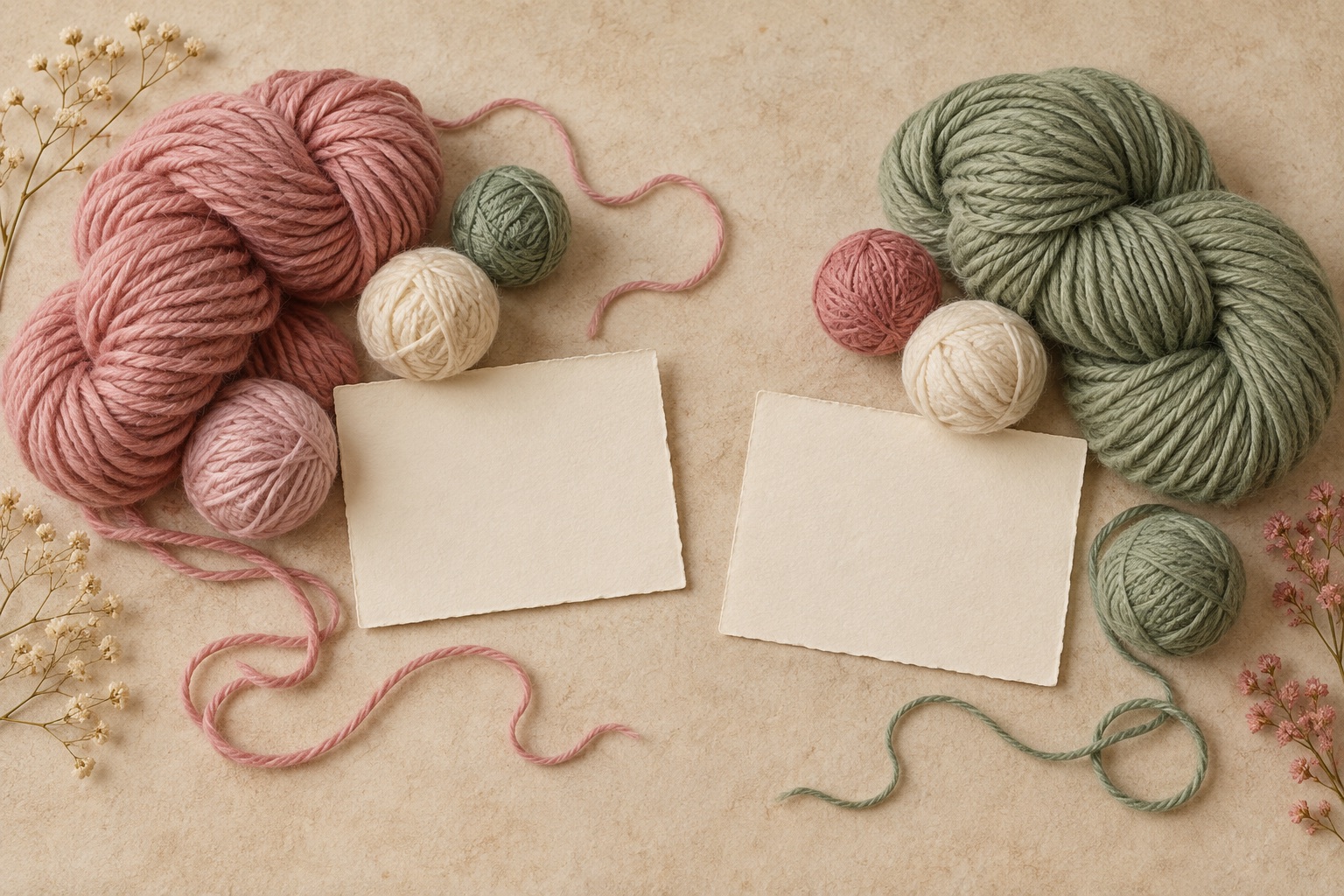
AI-generated decorative illustration. It is not a pattern, a yarn-quantity guide or an accurate colour sample. Compare two arrangements, not endless possibilities
Keep your first idea and one alternative in mind. You might place the main yarn ball nearer the centre for each version, or make two quick sketches with coloured pencils. Look at both and ask which feels closer to the project you want. If neither colour arrangement is to your liking, change just one colour and compare again. You can also decide to use only two colours. There is no need to keep adding options until choosing becomes a separate project. Treat the decision as something you are allowed to revisit.
Keep a simple record of the choice
Write down the colour names or label details beside their intended roles, along with one sentence about what you like. If you take a reference photo, keep the written names too: use the actual yarn when making your final choice. Before following knitting or crochet instructions, check its yarn requirements separately; a pleasing colour arrangement does not establish whether the yarn is suitable or how much yarn is needed. If you later make a sample, compare it with this first idea and change your plan if you wish. Your original choice is a starting point, not a promise.