POCOPOCO JOURNAL
Check care instructions before washing
Before washing a finished handmade piece, gather the yarn information and check washing and drying conditions separately. Turn anything uncertain into a question you can follow up.
About 3 minutes to read
When a finished handmade piece needs its first wash, you may wonder whether it can join your usual laundry. Whether you knit or crochet, pause for a check before putting it into water. The aim is to connect the materials you used with what you know about washing and drying the finished piece. Do not choose a method from a fibre name alone or apply one recipe to every handmade item. If something remains uncertain, leave washing for later and identify whom to ask and what needs checking.
Gather the yarn identities and their references
Choose one finished project. Check each yarn’s product name and manufacturer against your project notes or surviving bands. List different yarns separately. If you cannot establish whether a band belongs to a yarn used in the project, mark the connection as unconfirmed. Do not assign another product’s instructions to your yarn because they look or feel similar. Keep references you can return to: the original band, a readable photograph or the manufacturer’s product page. Rowan also directs knitters and crocheters to care information on yarn bands or individual yarn specifications before cleaning. You do not need to fill missing conditions from memory or guesswork.
Give washing and drying separate sections
Make separate sections for washing and drying, then check the information on your label or in the manufacturer’s instructions. GINETEX also explains washing and drying as separate care categories. Read the notes and conditions as well as the named method. Woolmark’s tumble-drying guidance is conditional on the care claim of a Woolmark-approved garment. Do not extend that guidance to every yarn, or treat “machine washable” alone as permission to tumble dry your own project. Leave unreadable symbols and missing explanations marked as needing confirmation.
Review whether the whole piece is covered
Include materials actually added to the project, such as an edging in another yarn, sewn-on decorations or a lining. One yarn’s care information is not automatically a confirmed care plan for the complete item. If the pattern includes finishing or care guidance, compare its scope with your yarns and any changes you made. When different references give incompatible conditions, note the conflict instead of choosing the convenient statement or inventing a compromise method. An observation made on a swatch alone does not guarantee every aspect of care for the finished piece.

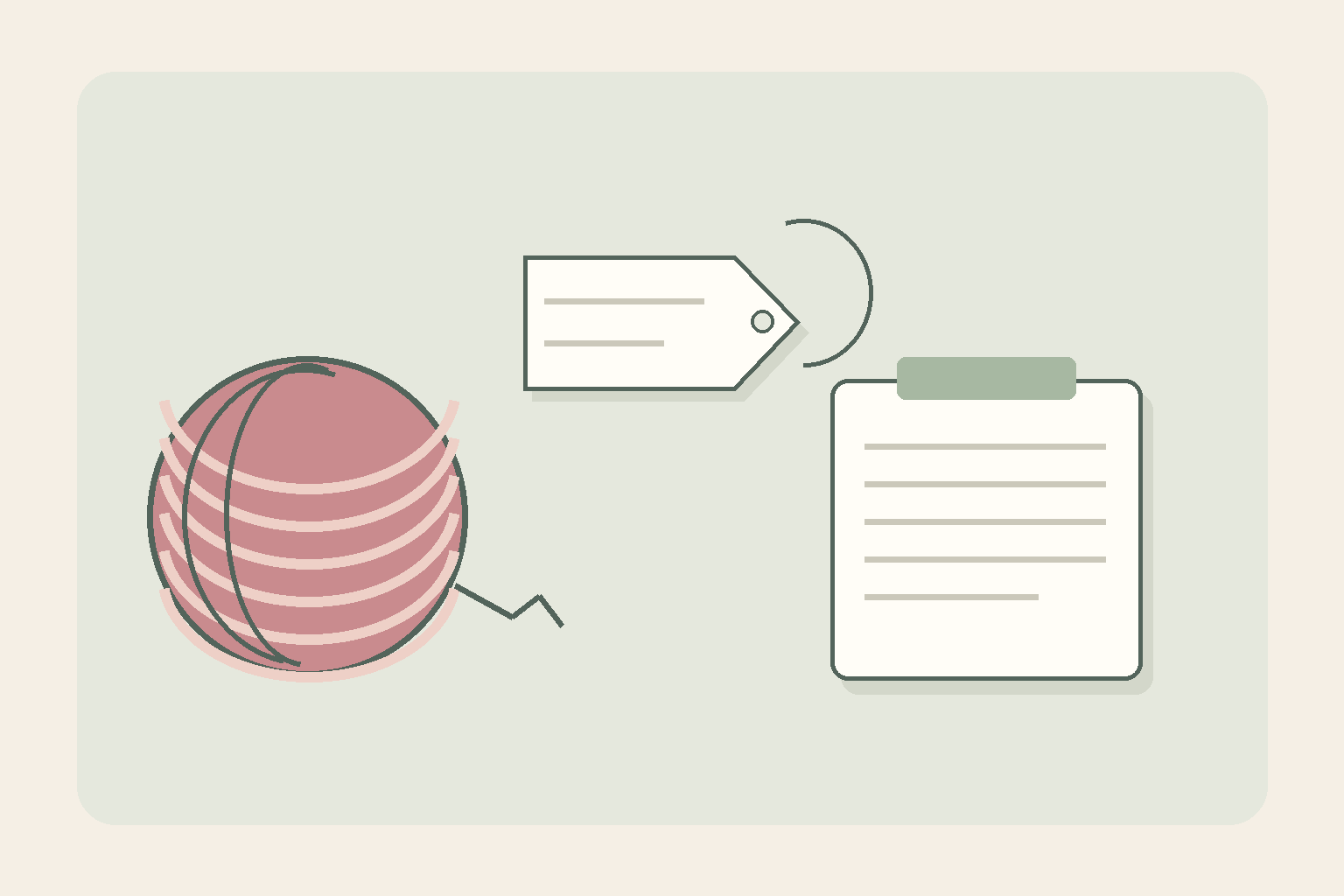
Original explanatory diagram created by PocoPoco with AI assistance. This invented note separates washing, drying and unresolved information. Lines stand in for text; it does not show official care symbols, actual conditions, a washing procedure, tested results or an app screen. Turn an unknown into a specific question
To ask the manufacturer, retailer or another relevant support contact, gather the product names, materials used, references and exact point you cannot resolve. Do not assume hand washing is suitable for everything; describe which condition remains unconfirmed for your piece. When you receive guidance, record who supplied it, when and what it applies to. Confirming washing conditions does not also resolve an unknown drying method. Plan the actual care according to the applicable instructions after the necessary questions have been answered.