POCOPOCO JOURNAL
Does the turning chain count? Single and double crochet compared
Twelve single crochets and twelve stitches including a double-crochet turning chain can have the same total but count different things. Check two basic flat-row examples.
About a 3-minute read
You count the end of a row and find one more stitch than the pattern expects. On the next row, you wonder whether the turning chain belongs in the total. Separate two questions: how many chains did you make, and how many stitches do those chains represent in this row's count? These examples cover basic single and double crochet worked back and forth in flat rows. They do not cover rounds or special starting techniques. Keep your own pattern and its notes beside you as you read.
Check the terminology and pattern notes first
This article uses US terms. US single crochet, abbreviated sc, is UK double crochet, abbreviated dc. US double crochet, abbreviated dc, is UK treble, abbreviated tr. Do not assume that the letters dc identify the same stitch in every English-language pattern. Next, find your pattern's instructions about whether its turning chain counts as a stitch and how many chains to make. The pattern's notes and individual row instructions take priority over the basic examples here. If the instruction remains unclear, consult the designer's explanation before continuing.
Single crochet: leave the turning chain out of the total
In basic rows of US single crochet, the chain-one turning chain does not count as a single crochet stitch. If the row total is twelve single crochets, count twelve actual single crochets. Adding the turning chain to report thirteen would change what that total means. The loop currently on your hook is not counted as a completed stitch either. A chain made to provide height is not automatically a stitch included in the row total. Before recounting, decide which completed stitches your pattern asks you to include, then count them slowly.
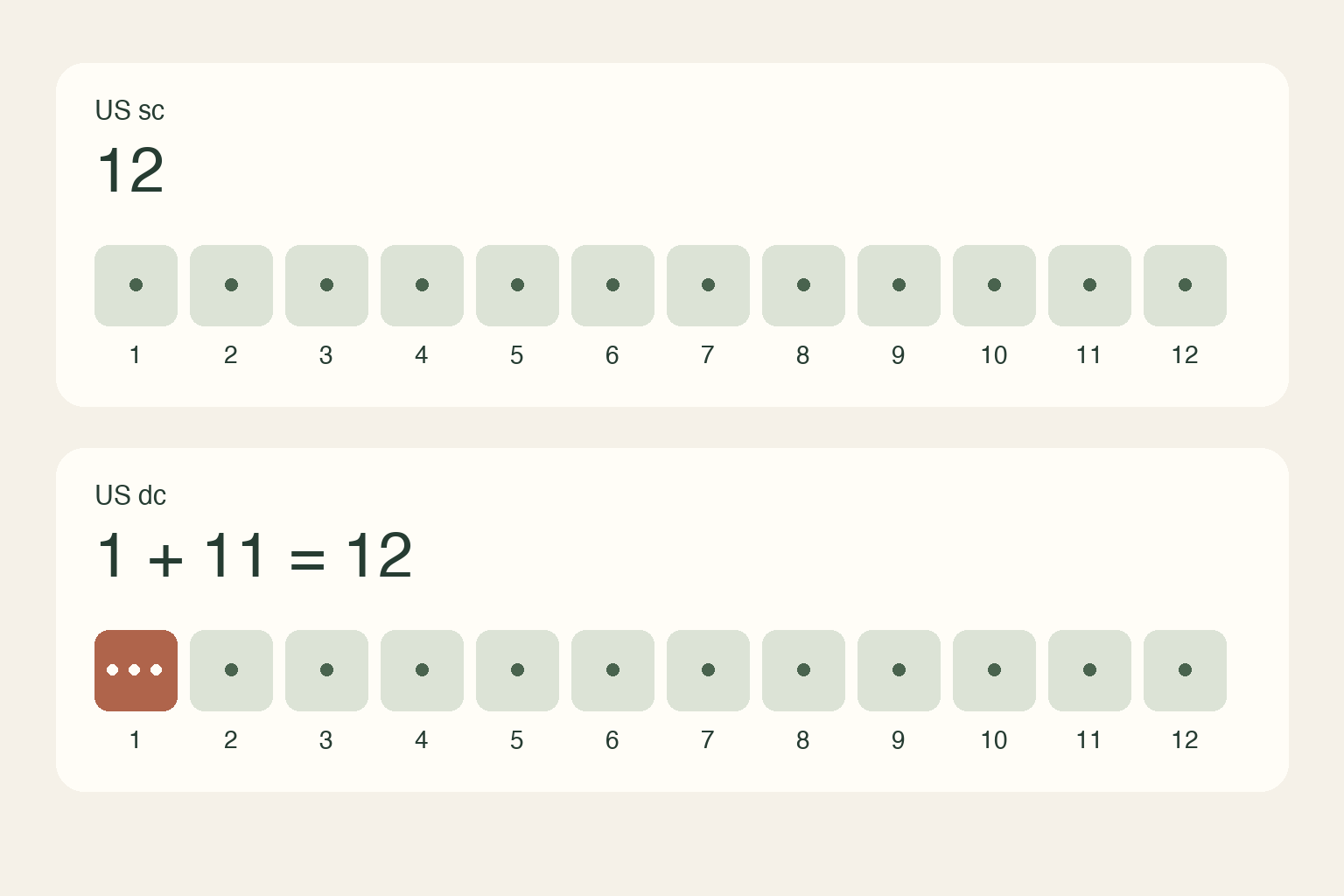
Original counting schematic by PocoPoco. The upper twelve boxes represent twelve US single crochets, excluding the turning chain. The first lower box represents the entire group of three chains when counted as one stitch; eleven actual US double crochets complete the total of twelve. The boxes do not show physical stitch shapes or where to work stitches. Double crochet: three chains can represent one counted stitch
When a pattern counts its chain-three turning chain as the first US double crochet, the entire group of three chains represents one stitch in the total. A twelve-stitch row in this example contains that one counted turning chain plus eleven actual double crochets. It does not contain three counted double crochets for the three chains. Working twelve actual double crochets and then adding the counted turning chain would also give a different total. This is a basic counted-chain example, not a universal rule: check both the chain number and the counting instruction in the particular pattern.
If the totals differ, check how the row ends are treated
At the end of the row, compare your count with the stated total. Confirm whether this row includes its turning chain, and make sure you have not added the loop on the hook. Then compare the beginning and end of your work with the pattern's instructions. A difference of one does not prove the turning chain caused it. Review the whole row, including any increases or decreases. Avoid adding or omitting an unrequested stitch just to reach the expected number; establish where the difference arose before starting another row.