POCOPOCO JOURNAL
Follow your chosen size through a knitting pattern
Check the grouped numbers in a multi-size knitting pattern. Note where your chosen size appears, then confirm its matching value in the next group.
About 3 minutes to read
A written knitting pattern covering several sizes can put several numbers in one instruction. Sometimes you need the value for your chosen size, rather than working every number in order. But you need to check what numbers and brackets mean in each pattern. Today’s small exercise helps you follow a size you have already chosen. It does not teach how to choose a size that fits or how to knit the project itself.
Find the size name and order in the original explanation
Locate the pattern’s size list, its explanation of grouped values and the name of your chosen size. Do not assume a familiar clothing-size name means the same dimensions. If you are unsure about your choice, return to the pattern’s measurements and sizing guidance. In a note, keep the size name together with its position in the entire list. Make the reference more specific than “one of the numbers in brackets.” Check which parts of this particular pattern use the correspondence you have identified.
Check “second overall” in an invented example
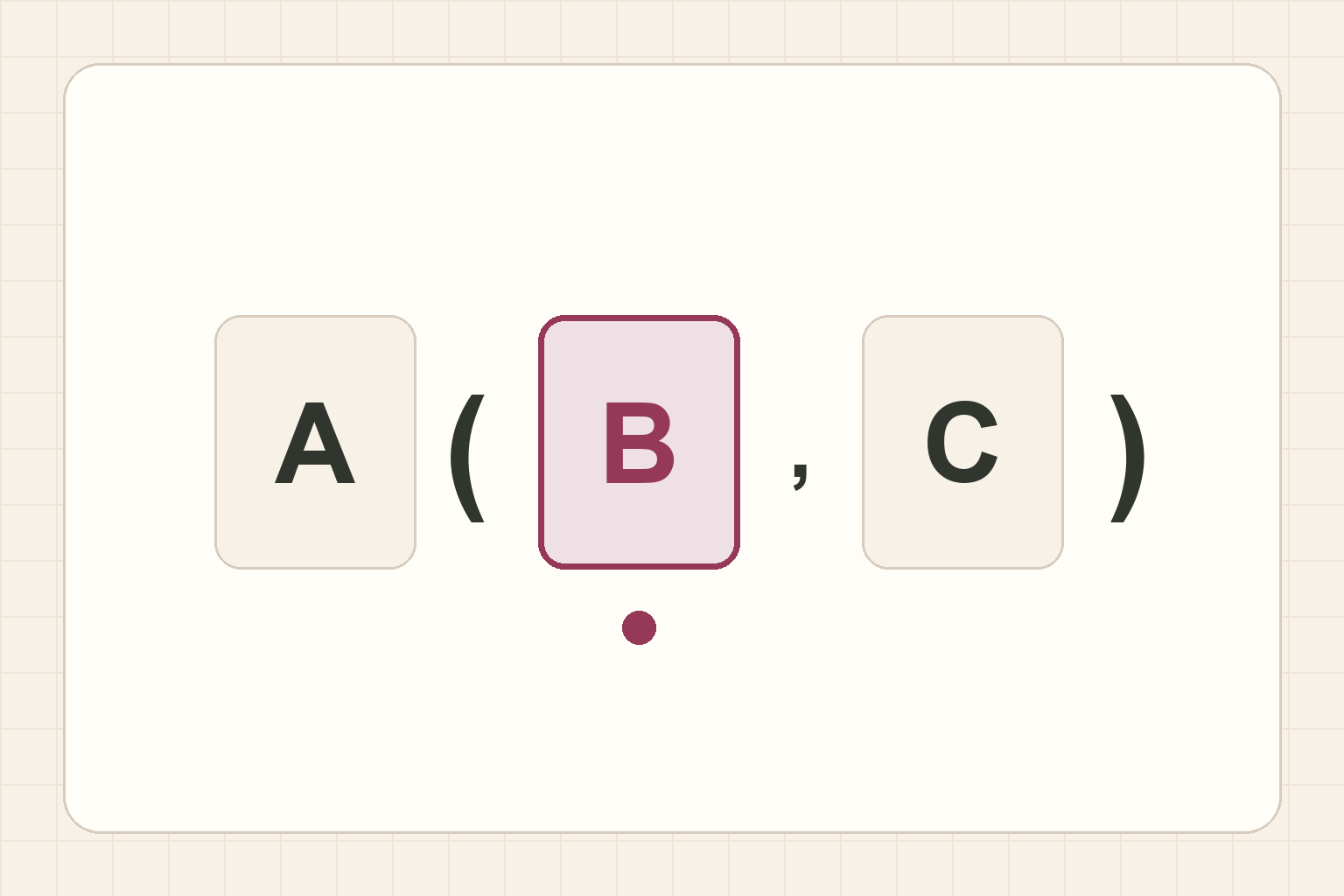
For this invented example only, define the size key as A (B, C) and choose B. B is second in the entire list but first inside the parentheses. If a stitch-count group using that same key reads 41 (47, 53), B’s value is 47 stitches. It does not mean to work 41, then 47, then 53 stitches, or to add them together. These are invented reading examples, not cast-on counts or dimensions for an actual project. Do not transfer them into your real pattern.
Read the meaning and correspondence again in the next group
If another stitch-count group is confirmed to use the same A (B, C) key and reads 19 (23, 27), B’s value is 23 stitches. Follow B’s value in that group, rather than repeating the number 47. Brackets can also serve other purposes, including repeats: their shape alone does not identify a size group. If your pattern explicitly says a single number applies to all sizes, retain that instruction too. For unclear size subsets, dashes or changed orders, check the designer’s explanation instead of filling gaps by guesswork.
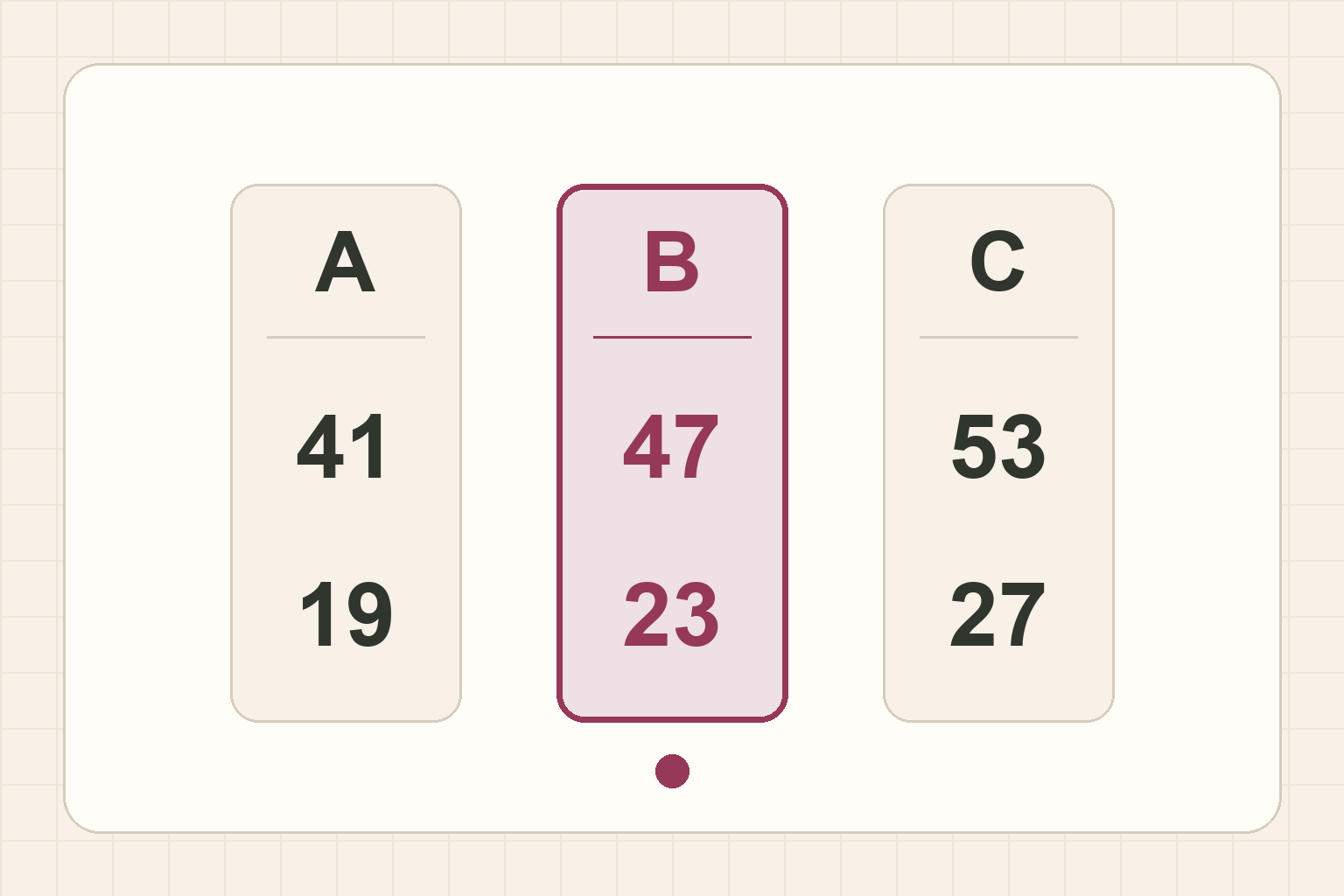
Original explanatory diagram by PocoPoco. Two invented groups show 47 and 23 corresponding to the same size B. These are not project instructions, measured results, a size-fit table, a stitch chart or an app screen. Do not transfer these values into an actual pattern. Mark the value without losing its instruction
After confirming the correspondence, try circling or underlining the relevant value on your paper or document. If you copy a number into a separate note, retain its source page or section, whether it represents stitches or length, and what the instruction asks you to do. Do not erase shared wording or units while distinguishing the other sizes. At each new section, compare the size name, order and local explanation again. A mark is a reference for rereading, not a replacement for checking gauge or measurements, and not a guarantee of the finished result.