POCOPOCO JOURNAL
Which way do you read a knitting chart? Flat rows and rounds
On a typical chart drawn from the right side, read a flat right-side row from right to left and a wrong-side row from left to right. In ordinary circular knitting, read every round from right to left. Check the row numbers and key on your own chart.
About a 3-minute read
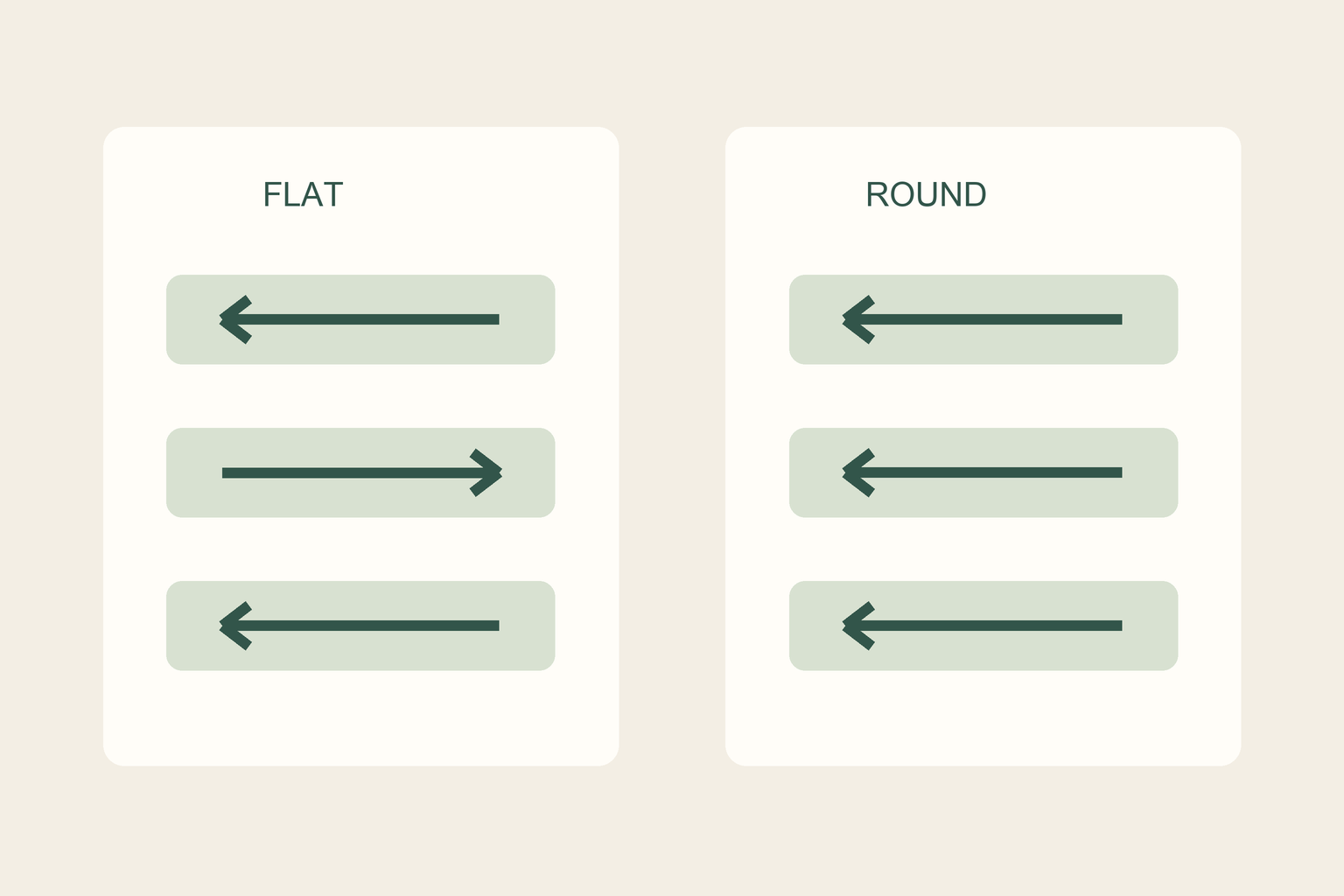
You have followed the first row of a knitting chart from its right edge. Where do you begin the next line? It depends on whether this section is worked back and forth or continuously in the round. Left and right describe the edge of the page or screen where you start following the symbols. They do not tell you which way to wrap the yarn. Put your needles down for a moment and open the written instructions beside the chart. Here we will read a typical chart that pictures the fabric from the right side.
Find the row you are about to work
Look for the row numbers and the notes beside the chart. Most charts progress from the bottom upward, but the first row of the project need not be the first row that uses the chart. Find where the text introduces this chart and put a finger on the indicated starting row. Check which face of the fabric will be toward you, the right side (RS) or wrong side (WS). “Right side” names a face of the fabric. It does not mean you should knit every stitch on that row. Follow the pattern’s labels instead of deciding from an odd or even number alone.
When working flat, find the starting edge after the turn
Consider a flat chart showing the rows worked on both faces. On a right-side row, normally follow the symbols from the right edge toward the left. Turn the fabric at the end. With the wrong side facing you on the next row, read the chart from left to right. The chart still pictures the right side of the fabric. You can leave the book or screen upright. For example, if row 1 is marked RS and row 2 is marked WS, read row 1 from the right and row 2 from the left. Find the first symbol on row 2 and look up its wrong-side instruction in the key. One symbol can call for different actions on the two faces.
In the round, begin the next round on the same side of the chart
When you keep the right side facing you and work around without turning, each return to the beginning of the round usually means reading the next chart line from right to left again. Compare this with the flat example. If you started round 1 at the right edge, round 2 also starts at the right edge. What matters is whether you turned the fabric, not that the number is now two. Circular needles alone do not tell you how this section is worked. If the pattern switches to working flat, check that section’s text and chart arrows again. Before moving up a line, slide your finger back to the starting edge. You can check the difference between the two routes without moving the hand that holds the yarn.
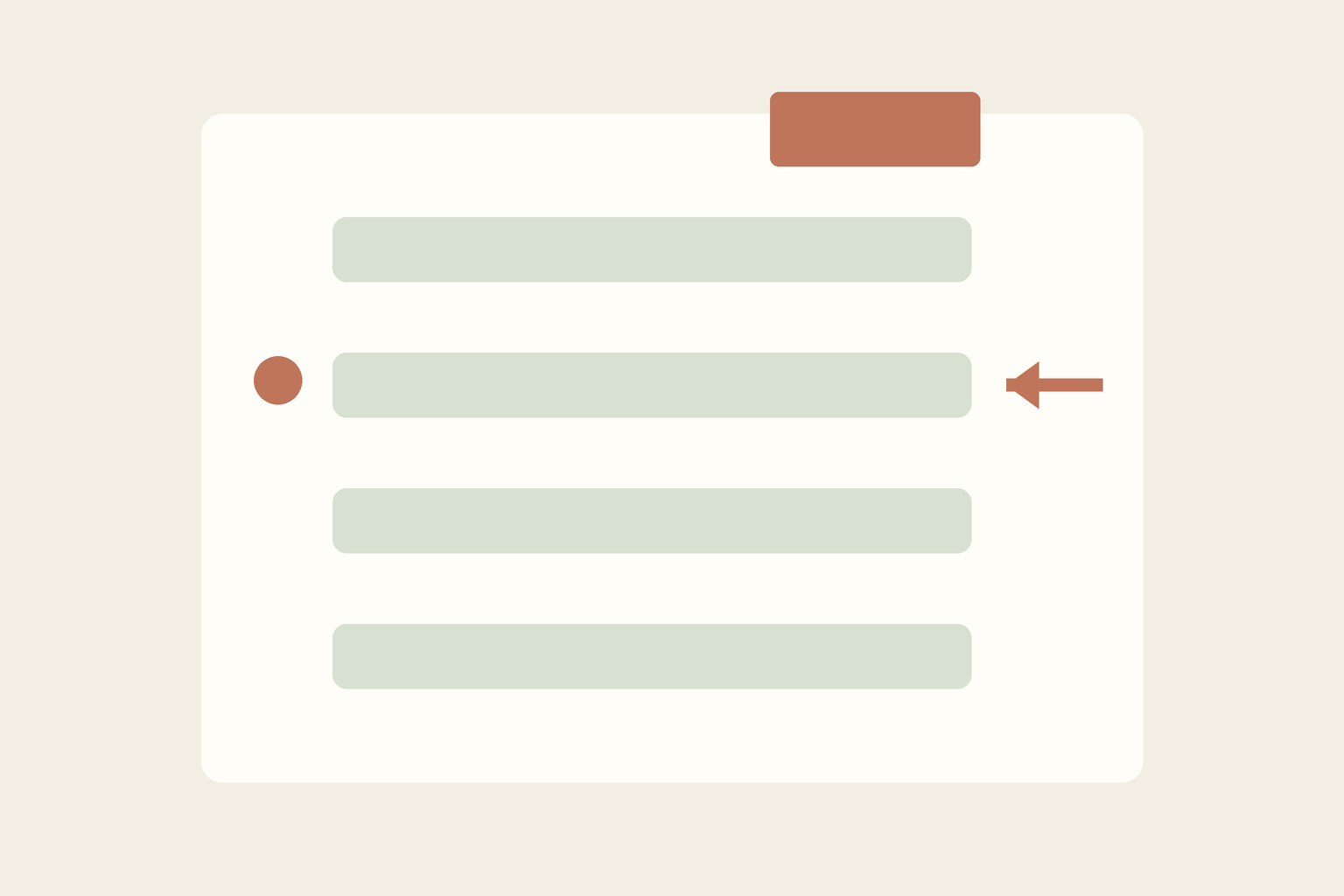
An original diagram created by PocoPoco with AI assistance. The edge marker illustrates keeping your place on a line. This is not an actual knitting chart, a measurement, or an app screen. When the numbers skip a row, find its written instruction
Suppose the margin shows row 1 followed by row 3, and the note says that only right-side rows are charted. After finishing row 1, find the instruction for row 2 in the chart notes or text before going on to row 3. The absence of symbols does not tell you to purl every stitch. Lay a slip of paper along the current line with its number still visible. When you stop, a note such as “Row 1 complete. Next, row 2 in the text” tells you where to look when you return.