POCOPOCO JOURNAL
Make a materials planning card before you begin
Separate your project, its stated materials, what you actually have and unanswered questions. Choose one thing to check before shopping or starting work.
About a 3-minute read
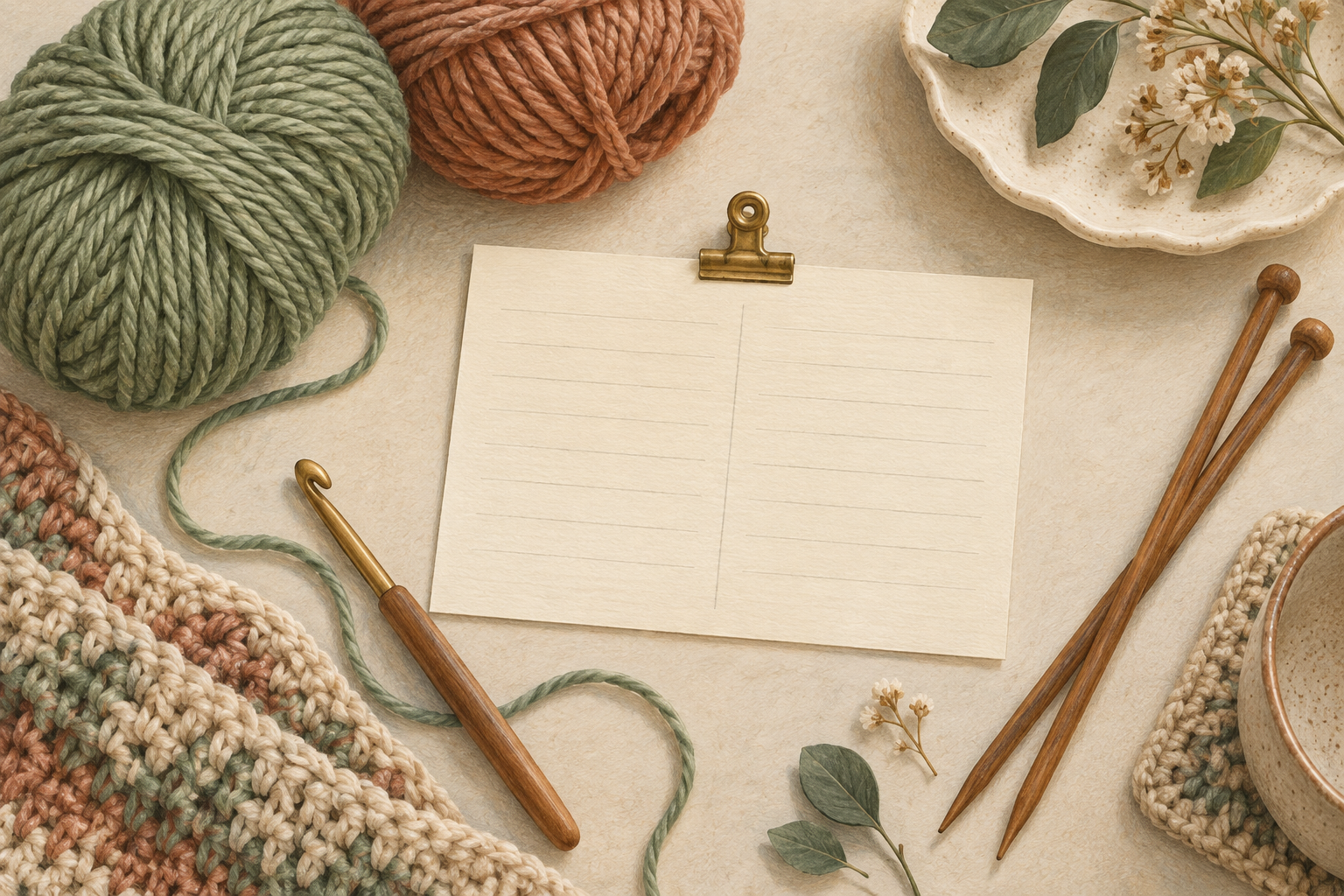
When you find a project you want to make, you may want to arrange your yarn or write a shopping list straight away. First, try gathering your materials plan on one card. You do not need an elaborate system: a paper card or your usual notes will do. This is an organizational suggestion for the period before you start knitting or crocheting. Its purpose differs from a note about your current row or where to resume. Record what you plan to make, what you have available and what you still need to check, in a form you can understand later.
Identify the project, version and size
At the top, write the project name. If you are following a pattern or written instructions, add the author, reference location, version or update information, and chosen size where known. Write “size undecided” if you have not chosen one; do not fill gaps by guessing. If you later realize you are looking at another size or set of instructions, compare that reference with your materials notes. The card does not replace the instructions. It identifies what your particular plan is based on.
Separate requirements from actual inventory
Make two sections: “materials stated in the instructions” and “materials I actually have”. In the first, make brief personal notes of the materials and quantities you have confirmed for your chosen project and size, keeping the stated units. In the second, record the yarn and tools you have physically checked. Leave items you only think you own as unconfirmed until you find them. Do not make the sections match simply because colours or names look similar. Placing these records together does not establish that a yarn substitution is suitable or that your quantity is sufficient.
Name the unknown instead of leaving a blank
Write what remains unclear: “required quantity not checked”, “quantity at home not checked”, or “specified tool not yet located”. This is a personal reminder that a blank does not necessarily mean an item is unnecessary. Distinguish something known to be missing from something you have not investigated. For example, confirming that yarn is at home leaves a separate question about whether it can be used for this plan. Keep that question open rather than rushing to an answer. Separating confirmed information from assumptions matters more than filling every space.

AI-generated conceptual illustration of separating information. It does not establish yarn quantities or suitability. Choose just one next check
Add a final section called “next check”. Write one action you can take now: select a size, reread the reference materials list, or look for a tool you own. When you complete it, add the result and date, then move to another question. If you do not yet know whether shopping is needed, you can leave purchasing decisions open. When your plan changes, revisit the project identity, size and materials sections together. Mark an older idea clearly if leaving it on the card could cause confusion.