POCOPOCO JOURNAL
Crochet hook sizes: check millimetres before matching labels
Do not replace Japanese size names with overseas letters or numbers by name alone. Check the pattern, the tool's millimetre marking and a swatch as separate tasks.
About a 3-minute read
An overseas pattern lists a hook size, and you wonder whether the hook you own matches. A familiar number does not establish which sizing system the name belongs to. Today is a small exercise in reading labels on regular yarn crochet hooks, rather than a conversion chart covering every country and product. Follow the relevant directions for fine lace hooks or special tools. Separate the job into finding the size name, comparing the millimetre marking and checking the fabric. This makes it easier to identify which detail you still need to establish.
Read the pattern's tool and sizing information
Start by checking whether the equipment list asks for a crochet hook or knitting needles. A familiar number does not make a knitting-needle table suitable for selecting a crochet hook. In an English-language pattern, look for the region or system, such as US or UK, used for the markings. Do not assume English means US sizing. Look for a millimetre equivalent, maker's name or the designer's equipment notes. If the size name remains unclear, check the pattern notes or designer's guidance instead of substituting a similar-looking Japanese number.
Compare millimetres before substituting a size name
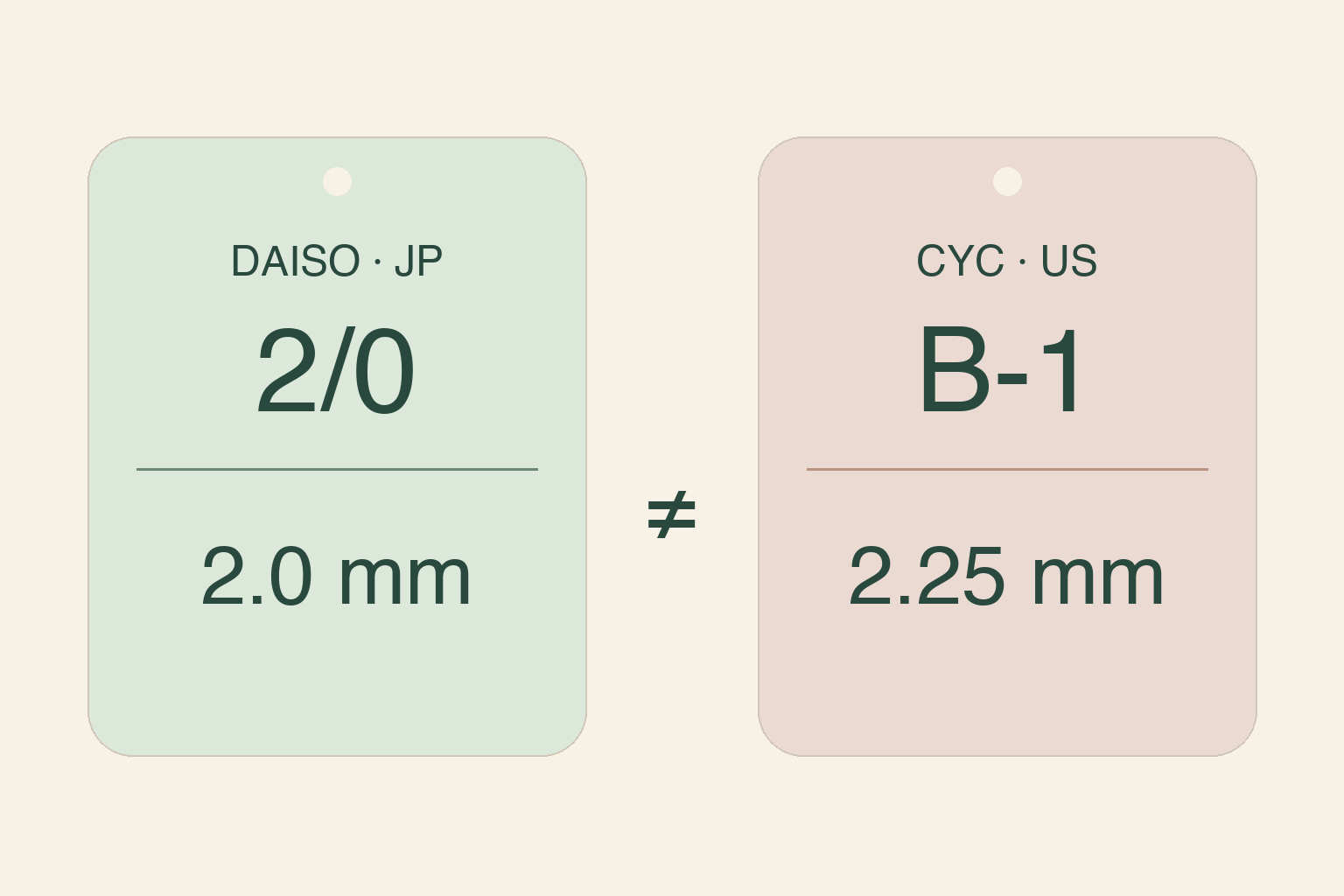
The Craft Yarn Council advises using package millimetre markings because letter and number sizing can vary between manufacturers. For one concrete comparison, DAISO's official Japanese listing labels its 2/0 hook as 2.0 mm. In the CYC regular crochet-hook US table, B-1 is 2.25 mm. These are not the same marked thickness. Compare 2.0 with 2.25 rather than treating both as interchangeable small hooks. This pair is an example, not a universal conversion rule. Check your own tool and the information provided by its manufacturer.
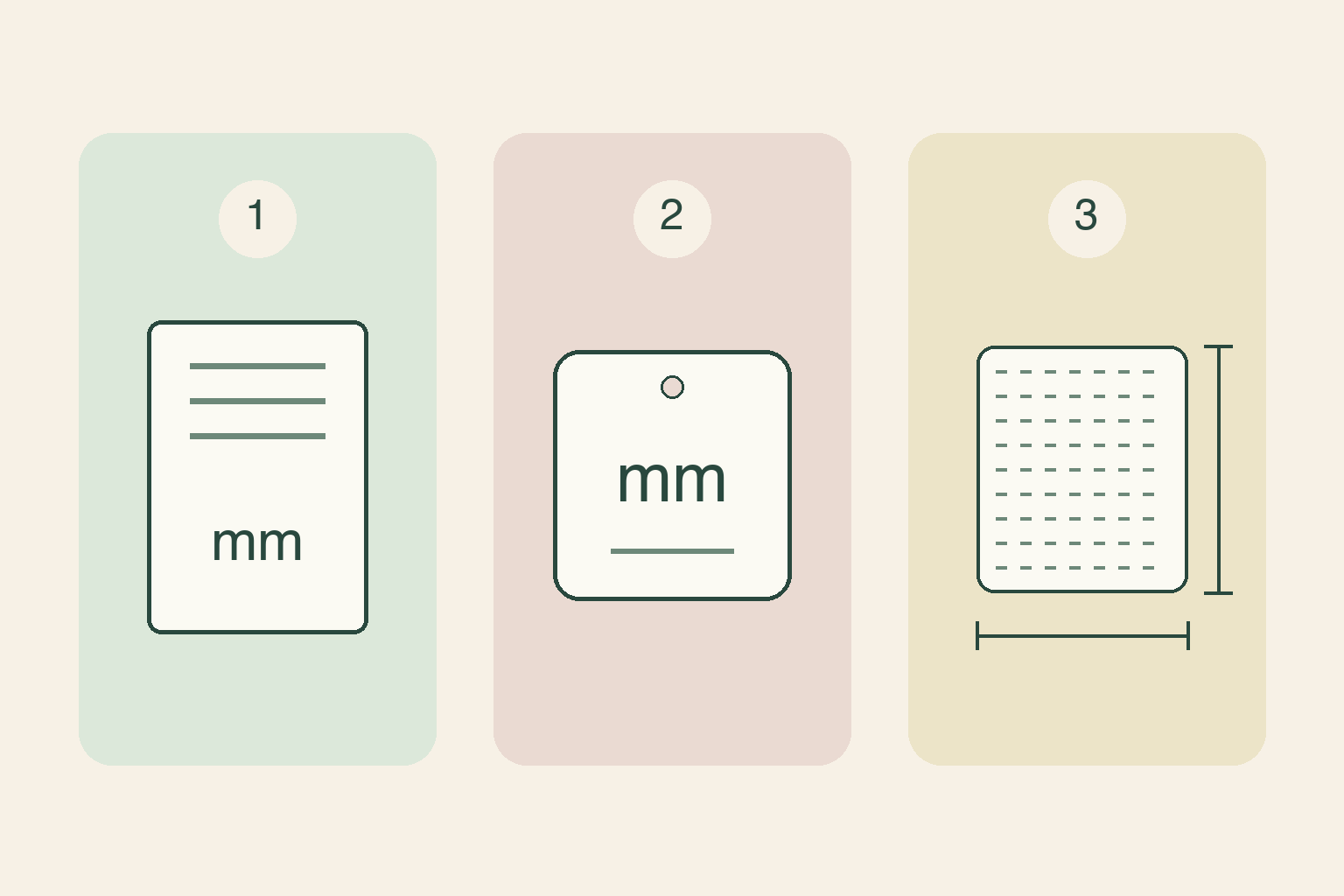
Original checking-workflow schematic by PocoPoco. Number 1 represents the pattern specification, 2 the tool's millimetre marking and 3 a swatch. It illustrates checking three items separately, not a photograph of a particular product, measured results or a record that the size or gauge has matched. Check what the dimension actually describes
On packaging, distinguish the hook-size marking from the tool's overall length or the package dimensions. The presence of mm does not turn every dimension into a hook size. Handle colour and visual similarity are not substitutes for a size marking either. If an inscription is unreadable, consult the maker's information using the product name or number; leave the match unresolved rather than declaring the hooks identical. Steel hooks for fine thread or lace also use sizing systems that differ from regular yarn hooks. Keep those tables separate and use guidance for the type of hook involved.
Check a swatch even when the labels match
Matching the pattern's specification with the tool's millimetre marking completes one equipment check. It does not guarantee the same finished dimensions or experience of working the fabric. Make a swatch with the required yarn and stitch pattern, then compare it with the pattern's gauge. If it differs, check the measuring method and specified conditions before adjusting a tool or another condition and trying again. Record the maker, size name and millimetre marking beside the result so you can identify the tool next time. Reading the label and checking the fabric remain separate small tasks.